Eastern subterranean termites enter Durham residences through microscopic foundation fractures as narrow as 1/32nd of an inch, building shelter tubes of red clay and saliva across concrete block piers to reach…
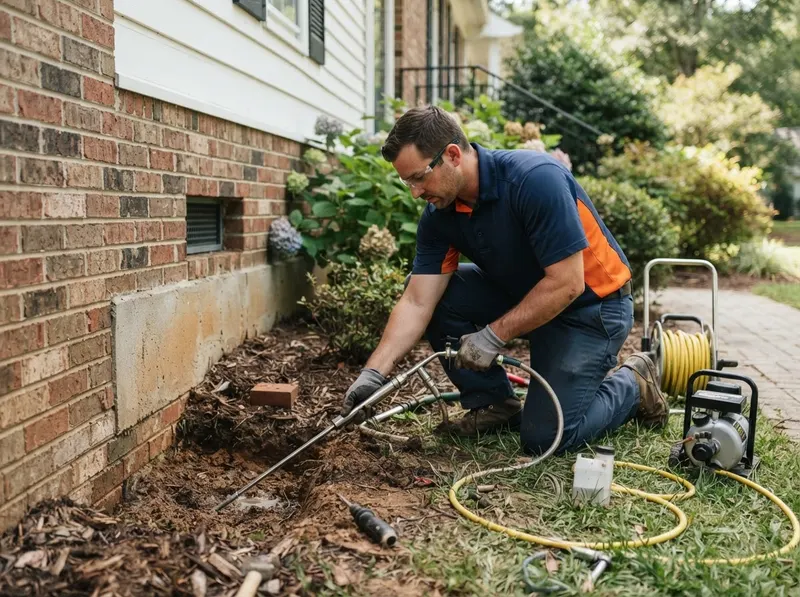
Eastern subterranean termites enter Durham residences through microscopic foundation fractures as narrow as 1/32nd of an inch, building shelter tubes of red clay and saliva across concrete block piers to reach structural wood framing. Homes situated in heavily wooded, humid pockets like Trinity Park, Watts-Hillandale, and Forest Hills frequently feature dense crawl spaces where damp soil directly contacts floor framing. A liquid non-repellent barrier binds chemically to Durham’s native red clay soil, creating an undetectable lethal zone around the building footers. Foraging worker termites pass through the treated zone without avoidance, transferring the active non-repellent chemistry throughout the subterranean central nest via mutual grooming and food sharing within 60 to 90 days.
Structural protection methods depend entirely on home foundation architecture. Monolithic concrete slabs in newer Southpoint developments and Brightleaf at the Park require precision interior perimeter drilling through garage pads and exterior trenching 6 inches wide by 6 inches deep along outside brick veneer. Older residences throughout Old West Durham and Old North Durham often sit atop historic brick-and-mortar crawl space piers. These older homes demand continuous trenching around every single interior support pier alongside perimeter walls to stop workers climbing upward into subflooring. The trade-off between exterior bait stations and continuous liquid chemical barriers lies in dispatch speed versus perimeter excavation: bait systems involve zero foundation drilling and eliminate entire subterranean colonies over several months, whereas liquid termiticide barriers halt active wood consumption at the foundation boundary within several days.
Over-the-counter termiticide sprays and perimeter powders purchased at retail hardware stores fail against subterranean colonies because topical sprays only kill individual foraging workers exposed on wood surfaces. The surviving subterranean queen continues producing up to 2,000 eggs daily beneath the frost line. Non-repellent liquid formulations do not volatilize into indoor airspace, preventing respiratory disruption for indoor pets and children once the perimeter soil barrier is backfilled. Property owners who encounter mud tubes on interior basement drywall or crawl space floor joists can request a physical inspection by phone at (984) 278-5426 without signing mandatory year-long maintenance contracts.
Every job gets a firm, written price after a free on-site visit.
Tell us about your subterranean termite treatment job in Durham and we'll send a clear, written quote, usually the same day.
 HomeFort Pest Control