Stinging insect nest removal is an essential defensive intervention when aggressive colonies threaten doorways, outdoor recreation areas, and structural wall cavities. In historical Durham neighborhoods like…
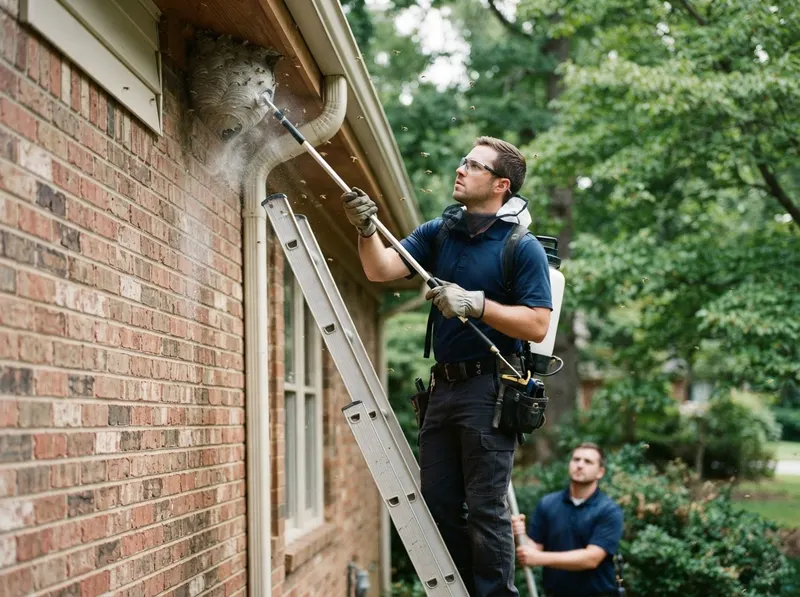
Stinging insect nest removal is an essential defensive intervention when aggressive colonies threaten doorways, outdoor recreation areas, and structural wall cavities. In historical Durham neighborhoods like Watts-Hillandale and Trinity Park, mature trees and multi-story rooflines create sheltered architectural recesses where bald-faced hornets and paper wasps build large paper combs. Retail aerosol knockdowns frequently trigger dispersal rather than complete neutralization, prompting defensive swarms that jeopardize household members and pets. Professional extraction employs calibrated application wands delivering pyrethroid or botanical micro-dusts directly into the comb envelope, eliminating guard insects instantly before extracting the physical structure to prevent secondary beetle infestations.
Subterranean yellowjacket colonies require a specialized approach distinct from exterior aerial nests. Properties near open foliage and waterways, such as Hope Valley near New Hope Creek or forested parcels around Northgate Park, frequently harbor ground colonies within abandoned rodent tunnels or hollowed root systems. Attempting to drown or pour retail chemicals into ground entries fails because colonies construct secondary exit passages and extensive horizontal chambers holding up to 5,000 workers. Non-repellent dusts placed under pressure permeate these subterranean gallery routes, collapsing the reproductive center without driving insects through crawlspaces or under the foundation slab into the home.
When hornets penetrate structural elements in neighborhoods like Old West Durham, Forest Hills, or Brightleaf at the Park, insects often move through weep screeds, soffit vents, and attic dormers into finished spaces. If wasps access a drywall void, surface activity sounds like dry rustling paper behind interior paint. Attempting to seal exit cracks before deactivating the brood forces trapped insects to chew through 0.5-inch sheetrock directly into living rooms or bedrooms. Professional remediation relies on directional thermal imaging to locate the brood core between wall studs, followed by pinpoint injection behind the baseboard or siding, ensuring complete mortality before sealing voids with copper mesh and elastomeric caulk. Every removal operates as a standalone service, providing complete defensive remediation without requiring 12-month service commitments.
Every job gets a firm, written price after a free on-site visit.
Tell us about your stinging insect nest removal job in Durham and we'll send a clear, written quote, usually the same day.
 HomeFort Pest Control