Bed bug thermal and chemical remediation fits multi-room residential properties, rental apartments, and single-family structures where active pest activity disrupts sleep and living spaces. Retail pyrethroid sprays…
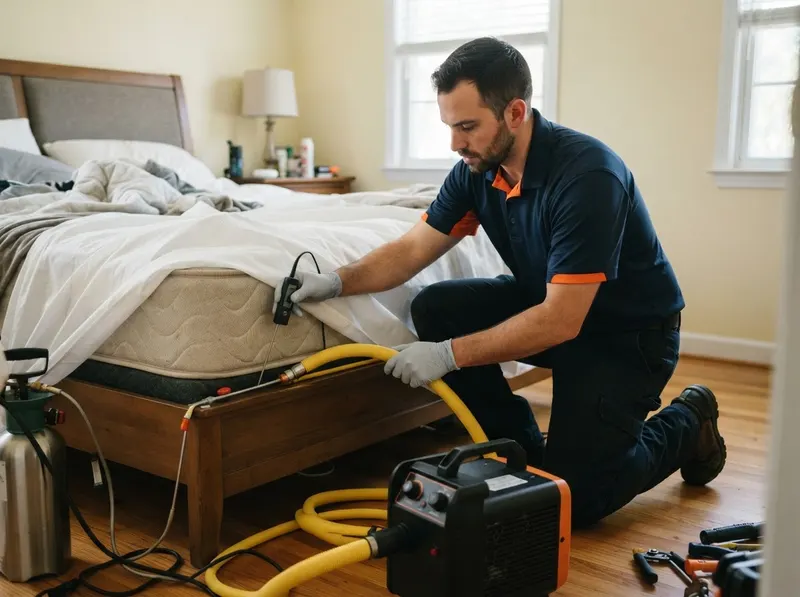
Bed bug thermal and chemical remediation fits multi-room residential properties, rental apartments, and single-family structures where active pest activity disrupts sleep and living spaces. Retail pyrethroid sprays from hardware stores regularly fail because modern bed bug populations exhibit documented biochemical resistance, often driving insects deeper into wall voids rather than neutralizing them. When nocturnal biting insects colonize bedroom seams and trim, combined thermal heat and precision chemical treatments stop active spread. Thermal heat penetrates insulated baseboards, mattress cores, and deep furniture joints that aerosol sprays cannot reach. Precision chemical barriers provide residual defense on perimeter surfaces, neutralizing stragglers that attempt to relocate once thermal machinery cools down.
The trade-off between thermal remediation and standalone chemical applications centers on preparation time versus speed of clearance. A whole-structure thermal protocol eliminates adult bugs and eggs in a single 6-to-8-hour visit, requiring residents to temporarily remove heat-sensitive items such as candles, medications, and vinyl blinds. Standalone chemical remediation involves lower initial equipment deployment costs, but it requires 2 to 3 treatment rounds spaced 14 days apart to intercept newly hatched nymphs. Standalone chemical options serve localized containment needs in smaller apartments, while heat remediation solves widespread multi-room infestations across larger floor plans.
Housing styles across Durham County present distinct containment variables. Older multi-story houses in Trinity Park, Watts-Hillandale, and Old North Durham feature thick plaster-and-lath walls, original hardwood floors, and radiator systems where insects seek refuge deep inside wall cavities. Remediation in these historic homes requires high-output industrial heaters to push heat through dense structural barriers. In suburban developments across Southpoint and Brightleaf at the Park, modern drywall framing and central HVAC ductwork allow rapid heat distribution, though interconnected plumbing chases require detailed chemical barrier work to prevent pests from migrating into adjoining bathrooms. In student-dense properties near Old West Durham, thermal protocols clear shared living areas without contaminating personal belongings or requiring long-term subscription agreements.
Technicians follow three clear operational steps to complete structural defense. First, inspectors measure pest distribution using high-lumen inspection lights and carbon dioxide monitoring along mattress welting, headboards, and electrical outlets. Second, high-powered electric or indirect-fired thermal heaters circulate hot air through commercial blowers until interior zones sustain a core temperature between 122°F and 135°F for at least 240 minutes, which denatures insect proteins. Third, non-repellent residual chemicals and desiccant dusts are injected into structural wall voids, outlet boxes, and floor joints to establish a lasting physical barrier against re-infestation.
Every job gets a firm, written price after a free on-site visit.
Tell us about your bed bug thermal and chemical remediation job in Durham and we'll send a clear, written quote, usually the same day.
 HomeFort Pest Control